Skip to content

Nagori Ware

  • Bowls
  • Tea
  • Tableware
Nagori Ware
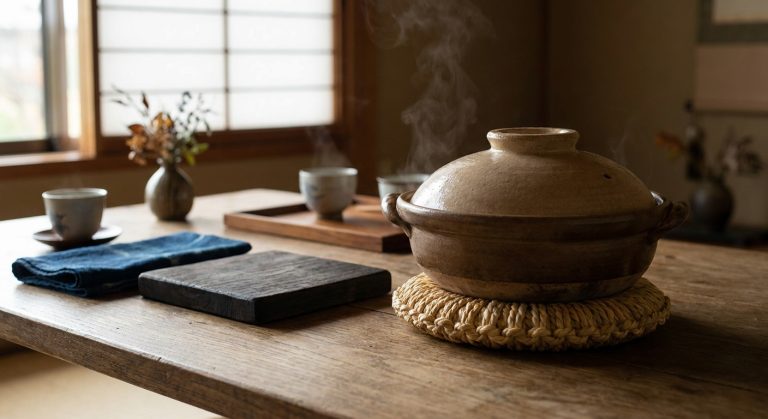
  • A Japanese clay donabe hot pot resting on a handwoven rush ring trivet on a wooden table, with a thick wooden trivet beside it
    Tableware

    Nabeshiki: What Size Trivet a Donabe Needs (Measure the Base, Not the Pot)

    ByMitsuru Kobayashi September 26, 2026

    You measure your donabe, get 32 cm, and go looking for a 32 cm trivet. It is not there. The largest rush ring on sale is 24.8 cm. The largest brass one FUTAGAMI makes is 18 cm. Nagatani-en — the Iga workshop that makes Kamado-san, the most famous rice donabe in Japan — sells a trivet for its own…
    Read More Nabeshiki: What Size Trivet a Donabe Needs (Measure the Base, Not the Pot)Continue

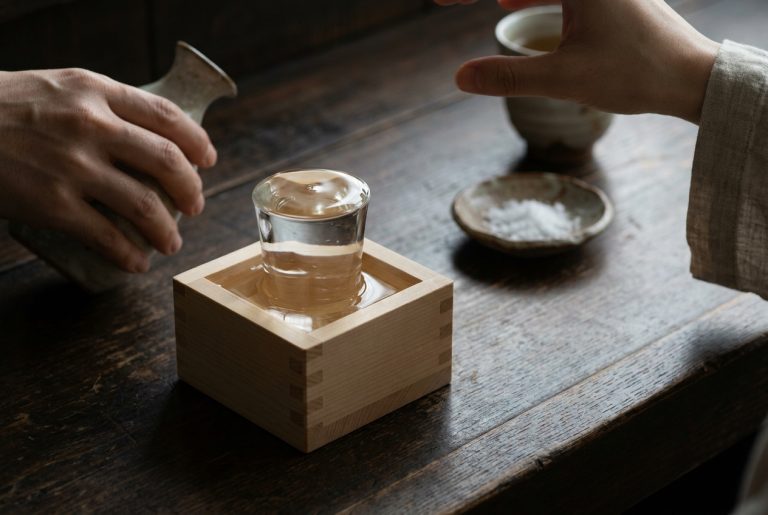
  • A plain hinoki masu box on a dark counter with a glass tumbler set inside it, sake brimming over the rim and pooling in the box, a small dish of salt behind
    Tableware

    Masu Sake Cup: What Size to Buy, and Why the Sake Overflows Into the Box

    ByMitsuru Kobayashi September 25, 2026

    Buy the one-gō box, about 85 mm square, in plain kiso hinoki, and keep it for cold sake you already know you like. That is the answer for almost everybody, and the reason has nothing to do with taste: a gō is 180.39 ml, the box was cut to hold exactly that, and every other size on…

    Read More Masu Sake Cup: What Size to Buy, and Why the Sake Overflows Into the BoxContinue

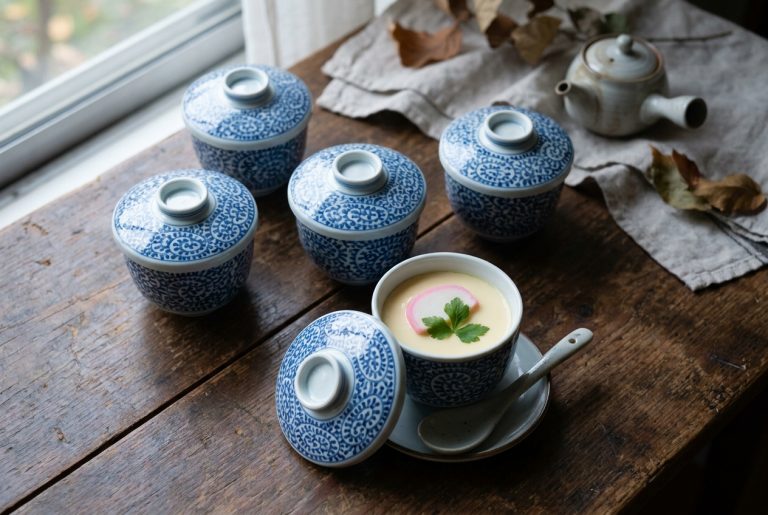
  • Five blue-and-white Japanese chawanmushi cups with lids on a wooden table, one lid lifted to show the steamed egg custard inside
    Bowls

    Chawanmushi Cups: What the Lid Is Really For, and What Size to Buy

    ByMitsuru Kobayashi September 24, 2026September 25, 2026

    A chawanmushi cup is a serving vessel, and almost everything that decides whether the custard comes out silky or full of holes happens somewhere else — in the steamer, at 85–90 °C, with a cooking chopstick wedged under the lid. Buy the cup for the table and for the arithmetic: 200–275 ml, filled to eight-tenths, and a…

    Read More Chawanmushi Cups: What the Lid Is Really For, and What Size to BuyContinue

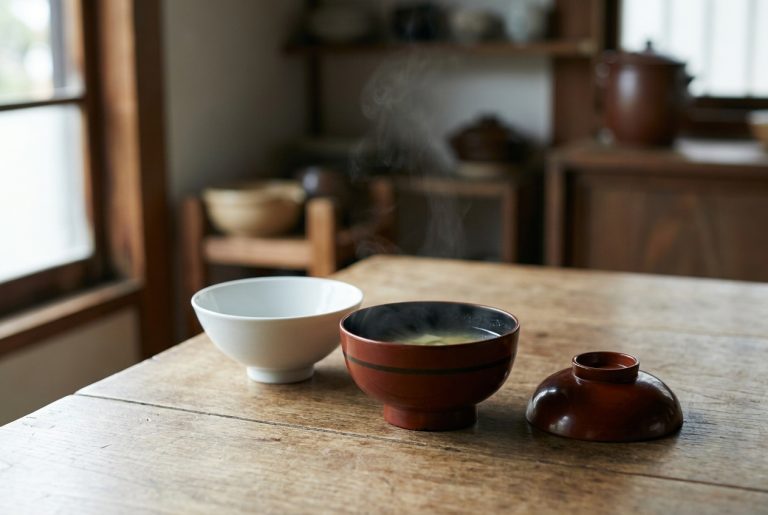
  • A lacquered wooden Japanese miso soup bowl filled partway, beside a white rice bowl and its separate lacquer lid
    Bowls

    Miso Soup Bowl Size: What an Owan Actually Holds (and Why the ml Figure Misleads)

    ByMitsuru Kobayashi September 23, 2026September 25, 2026

    Buy a miso soup bowl by its diameter, not by the millilitres beside it. The everyday size is 11.7 to 12.1 cm across — 3 sun 9 bu to 4 sun, in the unit the Japanese trade still uses on the tag. The capacity figure is close to useless here: a 12 cm owan is listed at 340 ml, and a…

    Read More Miso Soup Bowl Size: What an Owan Actually Holds (and Why the ml Figure Misleads)Continue

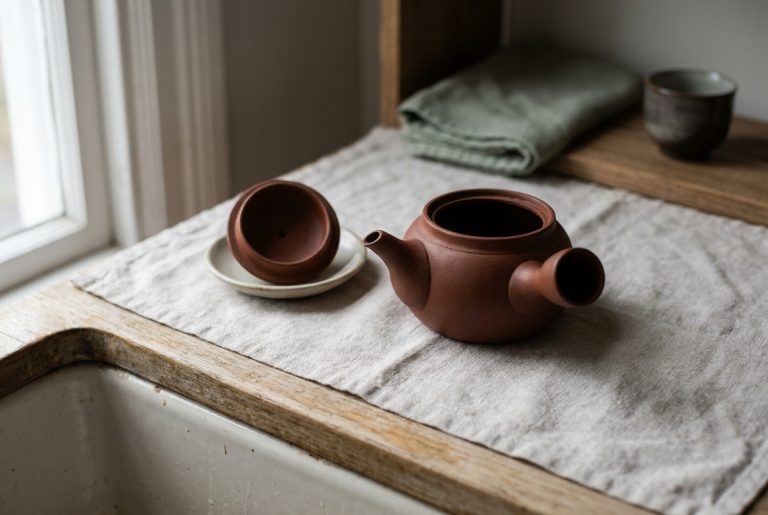
  • An unglazed red clay Japanese kyusu teapot with its lid removed and resting on its own small dish beside a kitchen sink
    Tea

    Kyusu Replacement Lid: Why a Broken Japanese Teapot Lid Can’t Be Replaced

    ByMitsuru Kobayashi September 22, 2026September 26, 2026

    On the oldest English-language tea forum there is a thread titled “Tokoname Replacement Lids?” Somebody had broken the lid of a Japanese teapot and wanted to know where to buy another. The thread is still there. It has no answer. That is not neglect. It is the answer. For almost every Japanese kyusu worth owning,…

    Read More Kyusu Replacement Lid: Why a Broken Japanese Teapot Lid Can’t Be ReplacedContinue

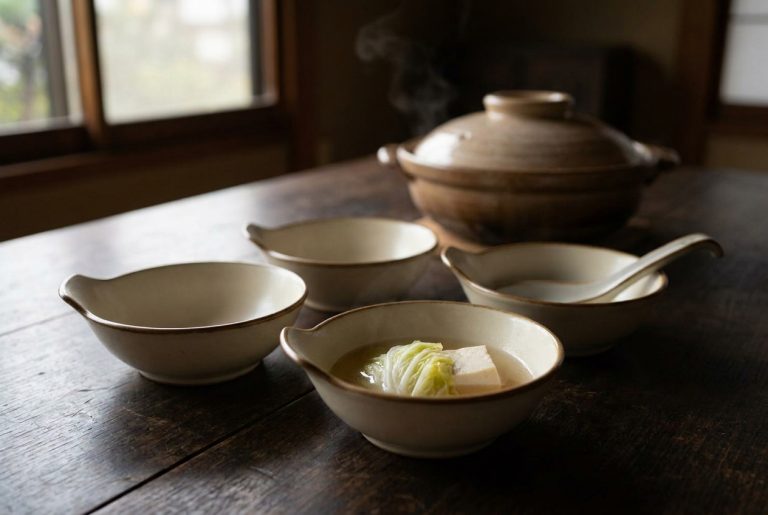
  • Four Japanese tonsui bowls with protruding lips on a dark wooden table, one holding broth with napa cabbage and tofu, a covered donabe steaming behind
    Bowls

    Tonsui: The Japanese Hot-Pot Bowl Sized for Your Hand, Not Your Appetite

    ByMitsuru Kobayashi September 21, 2026September 21, 2026

    Two shops in the United States will sell you a tonsui today. One files it under “Tonsui Dipping Saucer”: 4.53 inches across, 5.2 fl oz, $3.80. The other calls it a hot-pot bowl for individual portions: 13 cm, porcelain from Gifu, $28. Both are using the word correctly. Neither page mentions that the other kind exists. So the first…

    Read More Tonsui: The Japanese Hot-Pot Bowl Sized for Your Hand, Not Your AppetiteContinue

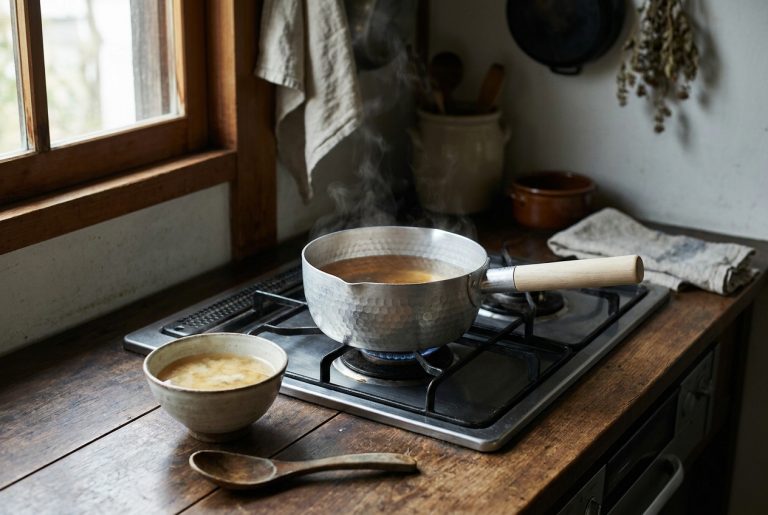
  • A hammered aluminium Japanese yukihira saucepan with a wooden handle simmering dashi over a gas flame, a bowl of miso soup beside it
    Tableware

    What Size Yukihira Nabe to Buy — and Whether Those Hammer Marks Were Ever Hammered

    ByMitsuru Kobayashi September 20, 2026September 26, 2026

    A yukihira nabe is the small, dimpled, one-handled pan that is in every Japanese kitchen and almost every Japanese restaurant. Buying one looks like a choice between sizes. It is really a choice between three things, in this order: whether your cooktop can heat the classic version at all, whether the dimples on the pan…

    Read More What Size Yukihira Nabe to Buy — and Whether Those Hammer Marks Were Ever HammeredContinue

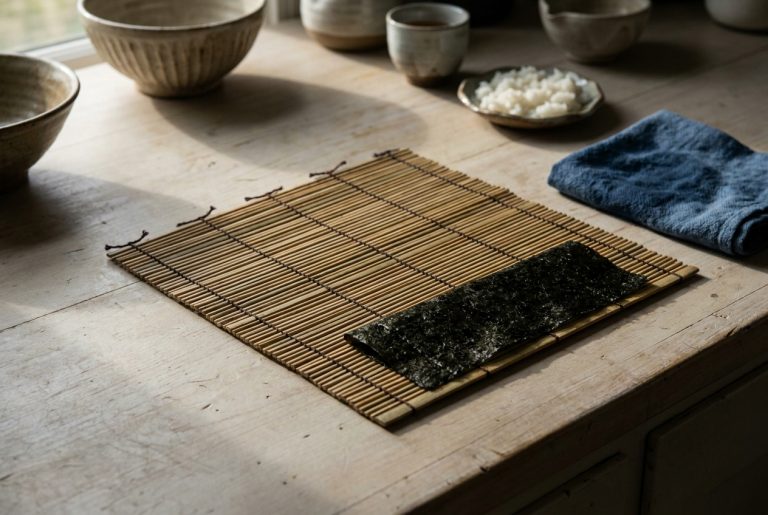
  • A bamboo sushi rolling mat lying open on a wooden counter, a sheet of nori resting on it, with a dish of rice and Japanese bowls nearby
    Tableware

    Makisu: Which Side Goes Up, and What Size Sushi Mat to Buy

    ByMitsuru Kobayashi September 19, 2026

    Buy the 27 cm square. Not because it is better made — at this price nothing is better made — but because a sheet of nori is 21 cm wide and 19 cm deep, and a 24 cm mat leaves you five centimetres of bamboo to finish the roll with. That is the whole size question. It has one…

    Read More Makisu: Which Side Goes Up, and What Size Sushi Mat to BuyContinue

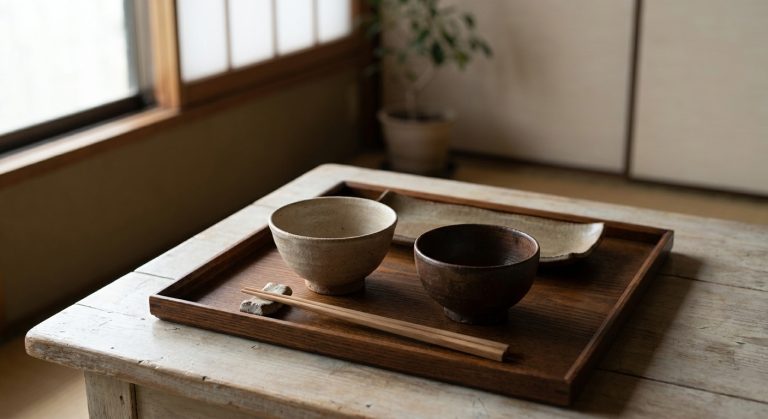
  • A rimmed wooden Japanese tray set with a rice bowl, a soup bowl, a shallow plate and chopsticks on a rest
    Tableware

    What Size Japanese Tray to Buy: Obon, Oshiki, Ozen, and the Depth Nobody Measures

    ByMitsuru Kobayashi September 18, 2026September 23, 2026

    Buy the tray that contains the dishes you already own, not the one that matches the number of people you feed. A Japanese tray is not a carrying device with a nice finish. It is the outer edge of one person’s meal, and its size was settled by what goes inside it several centuries before…

    Read More What Size Japanese Tray to Buy: Obon, Oshiki, Ozen, and the Depth Nobody MeasuresContinue

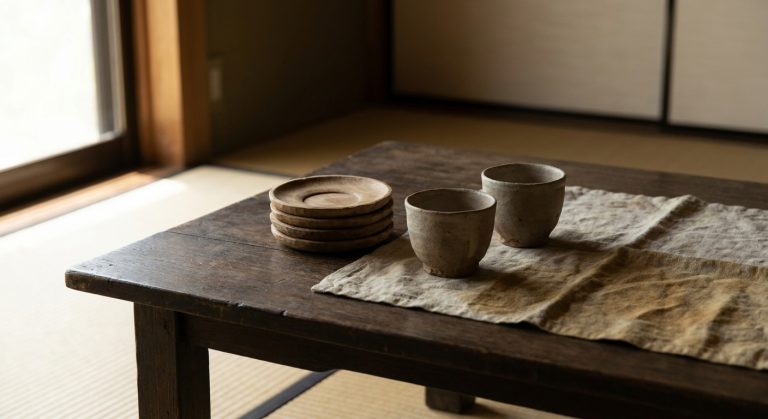
  • A stack of five plain wooden chataku tea saucers beside two unglazed Japanese teacups on a dark wooden table
    Tea

    Chataku: How to Buy a Japanese Tea Saucer for Cups You Already Own

    ByMitsuru Kobayashi September 17, 2026September 20, 2026

    Japanese offices still teach tea service as a procedure, and the first instruction in it surprises people: do not put the cups on the saucers. Carry both on the tray, cups standing in a row and saucers stacked beside them. Set the tray down on a side table. Then lift each cup onto its saucer,…

    Read More Chataku: How to Buy a Japanese Tea Saucer for Cups You Already OwnContinue

Page navigation

1 2 3 … 7 Next PageNext
  • Privacy Policy
  • Contact
  • Disclosure
  • About
  • About Nagori Ware — Who Writes This, and How

© 2026 Nagori Ware - WordPress Theme by Kadence WP

  • Bowls
  • Tea
  • Tableware